


Basil Seeds
Rub a leaf, breathe in summer, and turn fragrant basil into fresh pesto, garden pizza, and happy suppers.Perfumed leaves, pesto dreams, pizza nights.
FREE U.S. SHIPPING • 2-YEAR GUARANTEE


About Basil Seeds
(Ocimum spp.) This fragrant and flavorful annual herb is native to the tropical regions of central Africa and Southeast Asia. These heat-loving, frost-sensitive plants are typically grown as annuals and thrive in full sun. Try growing basil alongside your tomato plants! Quick and easy-to-grow plants provide beauty and flavor all season long.
How to grow Basil
Starting seeds
- Seeds germinate in 6-10 days.
- Start indoors 4-6 weeks before last frost and transplant out after all danger of frost has passed and soil has reliably warmed. Basil does not like cool weather and will suffer.
- Plant 1/4" deep.
- Ideal germination temperature is 70-85 F.
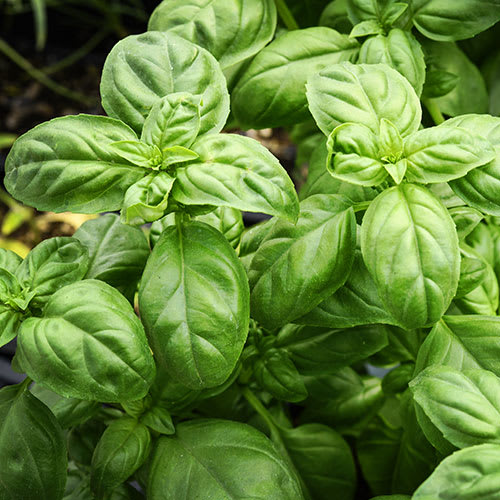
Growing
- Thrives in heat.
- Remove flower buds promptly to prolong harvest. Grow in full sun.
- Set out seedlings at any size, when warm conditions have arrived.
- Plants can be spaced at least 6-12 inches apart, but most varieties will fill in when spaced up to 24 inches.
- Keeping flower spikes picked off in early summer will allow the plants to grow more quickly.
PESTS/SPECIAL CONSIDERATIONS
- The most common pests are Japanese beetles, slugs and aphids.
- Harvest leaves at mid-morning, after the dew has dried but before the heat of the day so that the leaves are most fragrant and will keep fresh the longest.
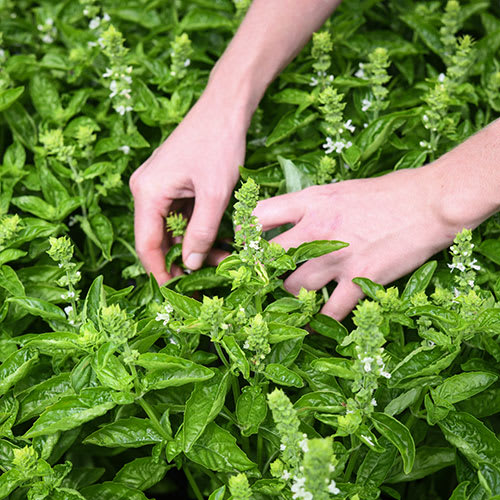
Saving seed
- Flower heads mature progressively from the bottom of the stem to the top.
- When the bottom seed head starts to turn brown, the stem can be cut and allowed to dry away from direct sun in a well-ventilated area.
- Rub dried raceme over a fine wire mesh and winnow off the chaff.
- Place chaff in a bowl and carefully swirl contents around. Seeds will gather at the bottom of the bowl.
- Tip the bowl so that the chaff can be discarded and blow the rest out carefully.
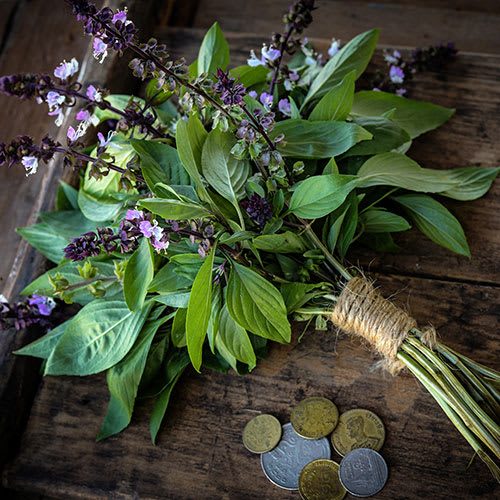
History and uses
Latin name Ocimum basilicum is an annual member of the mint family. Fresh basil is unrivaled in flavor and versatility, but it does not ship or store very well, and the quality will deteriorate quickly once harvested, making it ideal for growing at home. The quintessential large Genovese types are a staple in many Italian recipes from pesto to caprese salads; however, basil goes way beyond the Italian types. For Asian dishes, try growing Lemon basil or one of the several Thai varieties; all basils are traditionally added at the end of cooking to preserve the delicate flavors and aroma.
HISTORY
Holy basil, also known as Tulsi, has been revered for its medicinal and culinary value throughout India for thousands of years. In Ayurvedic medicine, it is believed to be a goddess incarnated in plant form (the mother medicine of nature) and one of the most cherished of India’s sacred healing plants. Basil is an "Old-World" plant and was loved for its virtues and yet cursed by Chrysippus, who lived 200 years before Christ, as an enemy to the sight and a robber of wits. Roman gardeners believed that the tiny seed would not germinate unless they cursed the crop as it was being planted.
USES
- Ornamental
- Culinary

15 / 183Swipe to browse collectionsArrow keys or the links to browse
Next Basketflower Seeds

