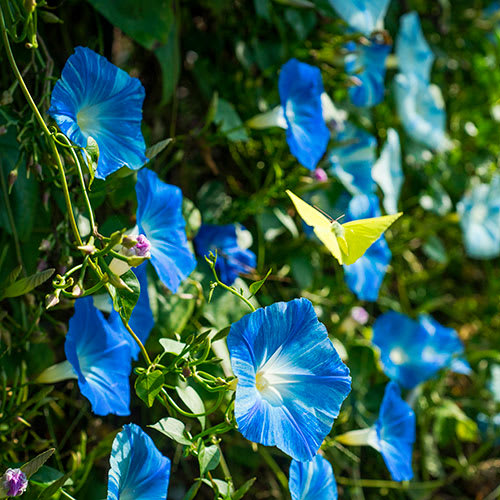
Morning Glory Seeds
Let colorful, old-time morning glory trumpets climb the porch and greet every new day with a flower show.Rise and shine with flowering glories.
FREE U.S. SHIPPING • 2-YEAR GUARANTEE


About Morning Glory Seeds
(Ipomoea spp.) Colorful, easy-to-grow vining annual that can self-seed; some varieties may become invasive in frost-free areas. Its cultivation and use have been documented in early China, Japan, and Mesoamerica. Jere’s favorite vine.
How to grow Morning Glory
Starting seeds
- Nick seed coat and soak seeds in warm water overnight to speed germination.
- Seeds germinate in 4-7 days.
- Start indoors 4-6 weeks before last frost or direct seed outdoors after all chance of frost has passed.
- Ideal germination temperature is 65-85 F.
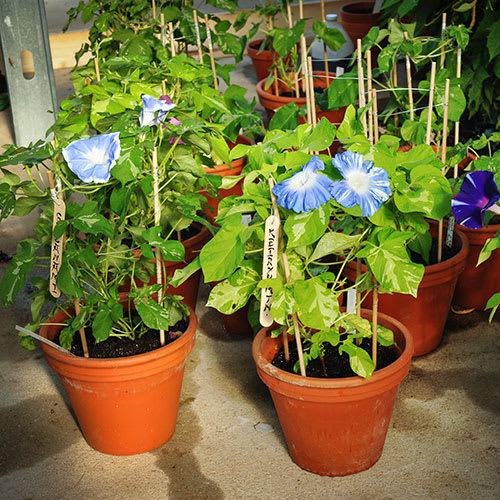
Growing
- Plants require full sun.
- Tolerant of a wide range of soil, they prefer well- drained loamy to sandy soil.
- Space plants 6 inches apart.
- Plant in a protected area, away from heavy winds.
PESTS/SPECIAL CONSIDERATIONS
- Morning glory is rarely bothered by pests and disease.
- Avoid wet foliage and overhead watering to prevent rust and fungal/rot issues.
Saving seed
Seed saving is quite easy.
- When the flowers fade, they leave behind large seed capsules containing the large, black seeds.
- Allow seeds to dry in a warm area out of direct sunlight for 7 days. Store seeds in a cool, dark, dry place over the winter.
- Remember to nick and soak your seeds the night before planting in the spring!
History and uses
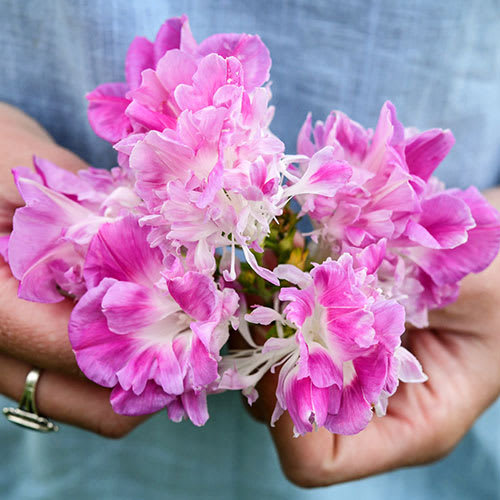
Latin name Ipomea sp. is an annual flower vine that is quick growing and frost sensitive. The blooms are trumpet shaped and come in an incredible range of colors, patterns and sizes. A perfect flower to grow up a trellis. Southern growers should note that this plant has the potential to become weedy in frost-free/low-frost areas.
HISTORY
The morning glory (Ipomoea spp.) was highly regarded in ancient Mesoamerican cultures for its spiritual significance, and some species were cultivated by ancient Chinese gardeners for their medicinal properties. In Japan, it has been a highly prized ornamental since at least the 9th century. Legend has it that when a massive fire broke out in Tokyo in 1806, burning much of the city to the ground, the morning glory was one of the first plants to rise from the ashes, sparking a renewed interest in the flower.
USES
- Ornamental
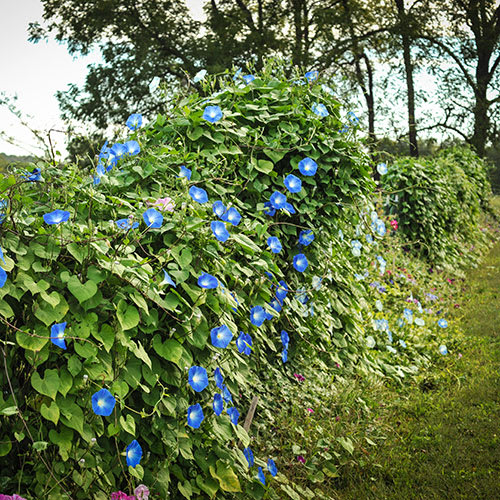
- Vining plant great to cover a fence, wall, trellis, or any vertical structure!
- Beds, borders, containers, cottage garden
- Visited by bees, butterflies, and hummingbirds