


Artichoke Seeds
Grow tender artichoke hearts and dramatic silver leaves; let a few showy purple buds flower for the bees.The best-tasting buds in the patch.
FREE U.S. SHIPPING • 2-YEAR GUARANTEE


About Artichoke Seeds
(Cynara cardunculus) Long-season plant originated in the Mediterranean region and won’t overwinter reliably north of Zone 7. Both kinds grow well in very rich soil and full sun. They need excellent drainage but ample moisture, and they may benefit from some mid-afternoon shade in hot areas. Great cut flower!
Edible and Architectural
First-Year Chokes
Edible Ornamental
Don't Skip Cardoon
How to grow Artichoke
Starting seeds
- Artichokes typically take two years to produce a crop, but they can be coaxed into flowering the first year.
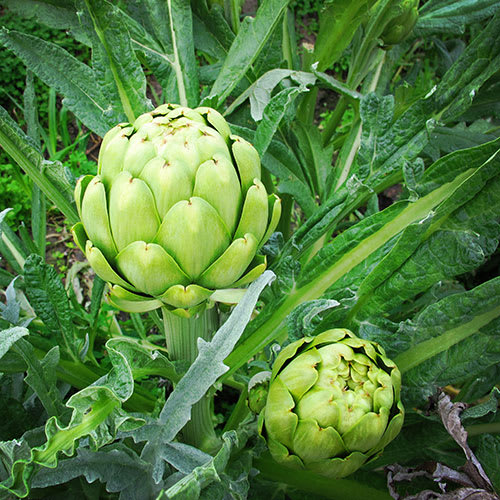
- To get a crop of artichokes in one year, start seeds indoors in pots 2 to 3 months before the last frost date in spring. Move the pots outdoors when four leaves have developed.
- Sow seeds 1/4 to 1/2 inch deep.
- When temperatures are occasionally freezing, protect plants if temperatures fall below 29 degrees.
- Two to four weeks of exposure to cool temps “vernalizes” the young seedlings, preparing them to bloom later in the season after plants have grown large.
- Cardoons may also be started early indoors, but vernalizing isn’t necessary.
- Seeds germinate in 10-21 days.
- Ideal germination temperature is 60-80 F.
Growing
- Both artichokes and cardoons prefer 6-12 hours of full sun.
- In very hot summer areas, they may benefit from some mid-afternoon shade.
- Provide rich, deep, well-drained soil and ample moisture.
- Seedlings require a chill period (nights below 45 F but above freezing) to produce artichokes.
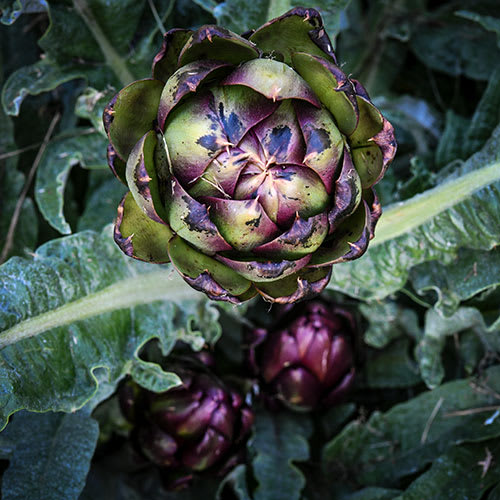
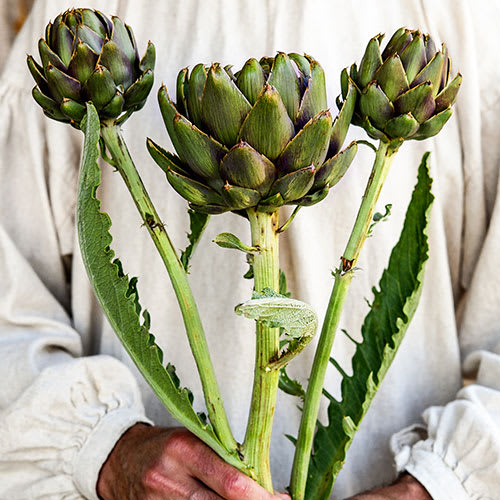
- Mature plants produce many buds over a long season. Simply cut off each bud, with an inch of stem, when it has reached its full size but before the “scales” begin to separate, which signals that the bud is about to bloom.
- After harvest you can cut the plant down to the ground and mulch it. Mulching can allow artichokes to act as a perennial in zones 5 or 6, where there are usually not sustained periods of deep freezes.
PESTS/SPECIAL CONSIDERATIONS
- Artichokes require frequent irrigation in order to produce large, tender heads. At the same time, make sure that the soil drains well, as the plants do not like waterlogged soil and will have a tendency to rot in these conditions.
- Mulching can help retain moisture and reduce the rate at which you need to water.
- Common pests with artichokes include armyworms and aphids.
Saving seed
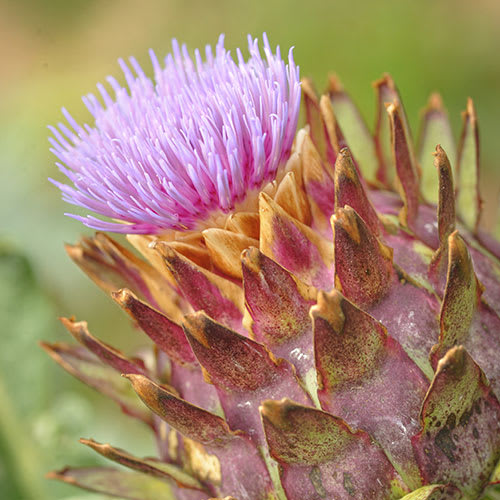
- Artichokes and cardoons produce big thistle flowers that, once open, display a bright purple flower.
- In order to collect seed, let the flower dry on the stalk.
- If you have harsh winters, harvest it partially dry and continue drying the flower inside.
- Once dry, remove the once-purple stamens. Below the stamens you will find dandelion-like seed heads with a seed at the bottom.
- In order to select the largest seeds, you may need to dig down further into the center of the flower. Using scissors or tweezers can help extract the seeds.
- Once the seeds are extracted from the dry flower head, finish air drying them and then store them in a cool, dry place for the winter.
History and uses
Artichoke and cardoon originated in the Mediterranean region. These long-season plants won’t overwinter reliably north of Zone 7. Start early and grow as an annual in the north.
HISTORY
Artichoke and cardoon are closely related and are both members of the thistle family. It’s believed that the wild cardoon is the progenitor of both the globe artichoke and the leafy cardoon. Cardoon, Latin name Cynarus cardunculus, is today cultivated for its stem, while the artichoke, Latin name Cynara cardunculus var. scolymus, is cultivated for its flower buds. While artichoke is believed to have been domesticated in Roman times, possibly in Sicily, cardoon’s domestication came later. The vast majority of the U.S. artichoke crop is grown in California.
USES
- Ornamental
- Culinary
6 / 183Swipe to browse collectionsArrow keys or the links to browse
Next Arugula Seeds

