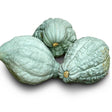
Winter Squash Seeds,
Blue Hubbard
Min. 20 seeds
FREE U.S. SHIPPING, 2-YEAR GUARANTEE
Description
(Cucurbita maxima). A spectacular storage squash, the famously long-lasting Hubbard squash arrived in Marblehead, Massachusetts, in 1854 in the holds of a ship from the West Indies. Seeds from the large green squash that originated in South America were shared with local seedsman J.H Gregory. A savvy breeder, Gregory selected the Hubbard's skin to a more unique blue color and devoted his career to marketing the massive fruit. Gregory credited a Miss Hubbard as the person who originally gifted him the seed; he noted that she told him it was the best tasting squash she had ever tried and that she was given the seeds from a captain aboard a ship from the West Indies. A conflicting account from a local Marblehead woman stated that Miss Hubbard had bred the squash in her home garden from seeds originally brought on the ship from the West Indies. Either way, the colossal blue squash was naturally a great choice for a long sea journey as the thick skin makes for a longer shelf life. Blue Hubbard squash is known for keeping up to 6 months in the pantry. The fruit can weigh from 15-40 pounds each, making it a top choice for restaurants and family meals.
Growing Tips: Blue Hubbard squash grows best in full sun, which is crucial for the plant's development and fruit production. The soil should be rich, well-drained, and amended with compost or aged manure to provide the nutrients necessary for the large fruits this variety produces. Regular, deep watering is essential, particularly during the flowering and fruiting stages. To prevent diseases, it's important to water at the base of the plant, keeping the foliage dry.
Plant Details
- Botanical Name
- Cucurbita maxima
- Life Cycle
- Annual
- Growth Habit
- Vining
- Sun Requirement
- 6–8 hr.
- Days to Germinate
- 5–10
- Days to Maturity
- 110
- Planting Depth
- ½–1 in.
- Plant Spacing
- 18–36 in.
- Ideal Temperature
- 70–95°F
- Frost Hardy
- No
Growing Guide
When to Grow
How to Sow and Plant
How to Grow
How to Save Seeds
FAQ
Is Blue Hubbard squash frost hardy?
No, Blue Hubbard squash is not frost hardy. It should be planted after the last frost in spring and harvested before the first frost in fall. Protection from early frosts is necessary to ensure the squash reaches full maturity.
How long can Blue Hubbard squash be stored after harvesting?
It can be stored for up to 6 months when properly cured and kept in a cool, dry, and dark environment. After harvesting, the squash should be left in a warm, sunny spot for about two weeks to cure, which hardens the skin and enhances its storage life. Once cured, it should be stored at temperatures between 50 F and 55 F.
What are common pests and diseases that affect Blue Hubbard squash?
It can be affected by common pests like squash bugs, cucumber beetles, and vine borers. To manage these pests, use row covers, practice crop rotation, and consider organic insecticides if infestations occur. The plant is also prone to diseases like powdery mildew, which can be minimized by ensuring good air circulation around the plants and avoiding overhead watering.
Browse our full range of winter squash seeds.