


Mizuna Seeds
Snip tender Japanese mizuna greens for salads and stir-fries, with a peppery spark and lovely crunch.Frilly peppery greens for lively salads.
FREE U.S. SHIPPING • 2-YEAR GUARANTEE


About Mizuna Seeds
(Brassica rapa var. nipposinica) Mizuna roughly translates to ‘water greens,’ a reference to its super succulent stems, which are often pickled. The greens are delicious fresh or sautéed. Mizuna can be harvested several times within its growth period, making it the perfect cut-and-come-again vegetable. It is one of the most bolt resistant of the brassicas.
How to grow Mizuna
Starting seeds
- Direct sow outdoors from early spring to late summer; you can succession sow every 2-4 weeks. 1/4 inch deep (1/2 inch deep in summer to keep seeds cooler).
- Ideal germination temperature is 75 but seeds will sprout between 45-80F.
- Sow seeds 1 inch apart in rows 18 inches apart.
- Thin to 6 inches apart.
- Seeds germinate in 4-7 days.
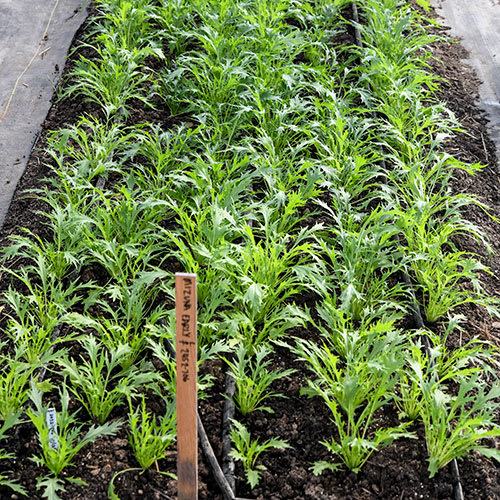
Growing
- Full sun to part shade.
- Provide loose, well-drained soil. Incorporating well-rotted compost into the planting site will help the greens to thrive but is not essential.
- Regular water requirements.
- Full grown should be ready to harvest in 40 days; baby greens can be harvested sooner.
PESTS/SPECIAL CONSIDERATIONS
- Less susceptible to brassica pests and diseases than its other brassica relatives. However, mizuna can be affected by these pests; use floating row cover from time of planting to prevent insect damage.
- To prevent disease and pest damage, do not plant brassicas in the same place repeatedly.

Saving seed
- This annual member of the brassica family is insect pollinated. It will not cross with all other members of the large brassica family; it can only cross with other members of the rapa species, which is much smaller.
- It is best to isolate flowering plants from other members of the rapa species by 800 feet to 1/2 mile or use caging techniques. The most practical choice is to just grow one Brassica rapa for seed saving per season!
- Allow plants to flower, the green pods to form and then brown and dry, then wait for a dry day and pull up the plants.
- Dry the pods further in a warm, dry, well-ventilated location. Many will lay the plants on tarps and beat the pods open to free the seeds.
- Separate seeds from chaff and place seeds in an airtight container. Store in a cool, dark, dry location.

History and uses
Latin name Brassica rapa var. japonica (alternatively Brassica rapa var. nipposinica) A cool-season, leafy Asian green with a lovely mild flavor. Mizuna has thin stalks and deeply serrated foliage. It resembles mustard greens, but it is typically much less pungent.
HISTORY
Mizuna is a Kyo Yasai, or traditional vegetable of Kyoto. The thin and flavorful greens have been enjoyed in Japan since antiquity, and mizuna was a standard green on imperial banquet tables. The traditional Kyo Yasai designation is limited to vegetables grown before the Meiji period of the 1800s; mizuna is one of those treasured Japanese delicacies.
USES
- Culinary
- Edible ornamental
- Container growing


