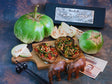
Eggplant Seeds,
Cambodian Green Giant
Min. 25 seeds
FREE U.S. SHIPPING, 2-YEAR GUARANTEE
Description
75 Days. Here is a large, round, flat variety from the Kingdom of Cambodia. We collected this variety in 2004, when we were touring this once war-torn Southeast Asian country. Attractive fruit is pale green with dark green stripes. This is a very unique color pattern for a large variety. These are great eating, and have a deep, full-bodied eggplant flavor.
Growing Tips: Start indoors in bright light 8-12 weeks before last frost date. Heat mat helps to warm soil and speed germination. Setting out larger transplants helps to fight pest pressure.
Plant Details
- Botanical Name
- Solanum melongena
- Sun Requirement
- Full sun
- Days to Germinate
- 10–15
- Days to Maturity
- 75
- Planting Depth
- ¼ in.
- Plant Spacing
- 18 in.
- Ideal Temperature
- 75–95°F
- Frost Hardy
- No
Growing Guide
When to Grow
How to Sow and Plant
How to Grow
How to Save Seeds
FAQ
What does Cambodian Green Giant look and taste like?
It is a large, round, flat variety with attractive pale green fruit striped dark green — a very unique color pattern for a large eggplant. It eats well, with a deep, full-bodied eggplant flavor. We collected it in 2004 while touring Cambodia.
How do I handle flea beetles?
Flea beetles are a common pest of eggplant. Thick mulch will help bury the insects, and a floating row cover over young seedlings protects plants when they are most vulnerable; eggplant sets fruit fine under cover, so you can leave it on until the plants outgrow it. Row cover also helps with aphids, and neem oil can be applied for serious infestations.
Can I save seed from it?
Yes, and easily. Eggplant flowers are perfect and mostly self-pollinating, but bees do visit and will cross them, so separate varieties by at least 50 feet, or cage a plant and tap the flowers, if you want seed that comes true. Let a fruit become overripe until it is slightly wrinkled and soft, scoop out the seeds, rinse them and spread them to dry thoroughly. Properly stored, they remain viable up to 4 years.