Jelly Melon Seeds,
African Horned Kiwano

3.466 ReviewsSKU: #JM101
Price
Regular price $3.00
Regular price $0.00 Sale price $3.00
Save $-3
/

Min. 10 seeds

FREE U.S. SHIPPING, 2-YEAR GUARANTEE


Description

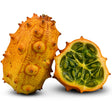
Very unusual fruit with spiny “horns.” The green-yellow skin turns a bright deep orange when ready to harvest, and the pulp inside the fruit resembles lime green Jell-O. The fruit has a sweet-sour, banana-lime tropical fruit taste, good juiced and sweetened or delicious with yogurt. This fruit is showing up quite often in U.S. markets. Native to Africa, it is hardy and easy to grow; can be grown just about anywhere you can grow melons. Beautiful vine and fruit! Tiny seed.

Growing Tips: Direct seed or set previously started transplants outdoors 2-3 weeks after last spring frost date. Provide rich soil well amended with compost. Trellis-growing conserves space.

Plant Details

Botanical Name
Cucumis metuliferus
Life Cycle
Annual
Growth Habit
Vining
Sun Requirement
8–12 hr.
Days to Germinate
7–14
Days to Maturity
120
Planting Depth
½ in.
Plant Spacing
12–24 in.
Ideal Temperature
75–90°F
Frost Hardy
No

Growing Guide

When to Grow

Direct sow African Horned Kiwano in a full sun bed once all danger of frost has passed, or set out previously started transplants 2-3 weeks after your last spring frost date. You can also start seed indoors and transplant into the garden when temperatures are consistently above 65 F. Sow the tiny seed 1/2 inch deep; germination takes 7-14 days. These vines are not frost hardy and need about 120 days to reach maturity; the green-yellow skin turns a bright deep orange when the fruit is ready to harvest.

How to Sow and Plant

  • Direct sow in a full sun area once all danger of frost has passed.
  • Alternatively, start indoors and transplant into the garden when temperatures are consistently above 65 F.
  • Sow seeds 1/2 inch deep.
  • Seeds will germinate in 14-21 days.

How to Grow

  • Space plants 18 inches apart.
  • Keep kiwano melon well mulched during the heat of summer.
  • Try growing this unique fruit on trellis or fencing to showcase its stunning visual appeal!
  • Provide full sun and rich soil, well amended with compost.
  • Water regularly.

PESTS/SPECIAL CONSIDERATIONS

  • Pickle worms can be a pest (this is the caterpillar stage of a moth that lays eggs at night).
  • To prevent pickleworm, cover your jelly melon vines in a floating row cover at night to prevent the moth from laying eggs.
  • Be sure to remove the row cover during the day to allow insects to pollinate the flower so you can get fruit.
  • Bacillus thuringiensis is also an option for treating pickleworm.

How to Save Seeds

  • Jelly melon is cross incompatible with other cucumis species, which means there is no need to isolate the plants to prevent cross pollination (unless you are growing 2 different varieties of Cucumis metuliferus).
  • Jelly melon is an annual, so it will set fruit and produce seed in the first season.
  • The plants rely upon insects to pollinate their flowers.
  • Allow fruit to mature to a deep orange and become quite soft, then scoop out the seeds and ferment to remove pulp just as you would a tomato.
  • Air dry seeds for a few days, out of direct sunlight.
  • Just a few fruit will produce lots of healthy seeds.
  • Store seeds in a cool, dark, dry place.

FAQ

How do I know when an African Horned Kiwano is ready to pick?

The green-yellow skin turns a bright, deep orange when the fruit is ready to harvest. If you are saving seed, let the fruit go further, to deep orange and quite soft, then scoop out the seeds and ferment them to remove the pulp just as you would with a tomato.

What does African Horned Kiwano taste like?

The pulp inside resembles lime green Jell-O and has a sweet-sour, banana-lime tropical fruit taste. It is good juiced and sweetened, or served with yogurt.

Can I grow African Horned Kiwano on a trellis?

Yes. Trellis growing conserves space and showcases the vine and fruit. Give the plants rich soil well amended with compost, space them about 18 inches apart, water regularly, and keep them well mulched through the heat of summer.
Customer reviews

3.4 / 5 66 Reviews

What gardeners are saying

  • Rampant vines: Climbs 20 feet and smothers neighbors; give it a fence of its own.

  • Needs a long season: Fruit sets late and ripens slowly; frost beats it in short summers.

  • Pests pass it by: Deer, squirrels and bugs leave the spiny vines alone.

  • Divisive flavor: Tart lime-and-banana jelly; green fruit eats like a cucumber.

  • Heads up: Spines cover fruit and vines; wear gloves and long sleeves.