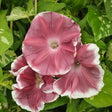
Morning Glory Seeds,
Chocolate
Min. 10 seeds
FREE U.S. SHIPPING, 2-YEAR GUARANTEE
Description
(Ipomoea nil). The Japanese began selecting morning glories in the 9th century, and this is one of their most stunning. Legend has it, that in 1806, a massive fire broke out in Tokyo, burning much of the city to the ground. The morning glory was one of the plants to rise from the ashes, sparking a frenzy of interest in the flower. Huge, 5" blooms are the loveliest creamy, chocolate-pink color. In Japan, this color is described as "kaki, or persimmon." Large plants produce loads of these beauties!
Growing Tips: Chocolate morning glory thrives in full sun and well-draining soil with a pH of 6.0-7.0. It grows quickly and is perfect for covering trellises, fences, or arbors with its vines. Provide support for the rambling vines, and expect flowers all summer. Avoid wet foliage and overhead watering to prevent rust and fungal/rot issues.
Plant Details
- Botanical Name
- Ipomoea nil
- Life Cycle
- Annual
- Days to Germinate
- 5–21
- Days to Maturity
- 60–90
- Planting Depth
- ¼–½ in.
- Plant Spacing
- 8–10 in.
- Ideal Temperature
- 70–75°F
- Frost Hardy
- No
Growing Guide
When to Grow
How to Sow and Plant
How to Grow
How to Save Seeds
FAQ
Do the seeds need to be nicked and soaked?
Nicking the seed coat and soaking the seeds in warm water overnight speeds germination. Sow Chocolate morning glory 1/4 to 1/2 inch deep at an ideal germination temperature of 65 to 85 F; seeds germinate in 5 to 21 days.
When and where should I plant it?
Start indoors 4 to 6 weeks before the last frost, or direct seed outdoors after all chance of frost has passed. This plant is not frost hardy. Give it full sun and well-draining loamy to sandy soil with a pH of 6.0 to 7.0, space plants 8 to 10 inches apart, and choose a protected area away from heavy winds. Avoid wet foliage and overhead watering to prevent rust and fungal or rot issues.
What do the flowers look like?
Huge 5-inch blooms in the loveliest creamy, chocolate-pink color, a shade described in Japan as kaki, or persimmon. Large plants produce loads of them all summer, and the quick-growing vines are perfect for covering a trellis, fence, or arbor.