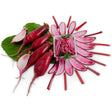
Radish Seeds,
Red Beauty
Faster shipping options also available.
Description
(Raphanus sativus). We love this super-sweet Chinese variety, and it is fully red from skin to heart, making for beautiful red pickles; it is delicious in salads, soups, stir fries and just can't be beat for a wonderful, juicy, fresh eating radish! This variety is also high in antioxidants, making it a nutrient-dense veggie perfect for the cool season when the winter vegetable selection dwindles. For best flavor and root development, be sure to plant in the late summer to early fall. Expect a bit of variation in this variety; some roots may produce white centers.
Growing Tips: The Red Beauty radish grows best in well-draining, fertile soil with a slightly acidic to neutral pH (6.0-7.0). Choose a sunny location with at least 6 hours of direct sunlight per day. The soil should be loose and free of rocks to allow the roots to expand. Water regularly to keep the soil evenly moist but not waterlogged, which helps prevent the radishes from becoming woody or pithy.
Plant Details
- Botanical Name
- Raphanus sativus
- Life Cycle
- Annual
- Sun Requirement
- Full sun
- Days to Germinate
- 3–6
- Days to Maturity
- 25–30
- Planting Depth
- ¼ in.
- Plant Spacing
- 4 in.
- Ideal Temperature
- 50–75°F
- Frost Hardy
- Yes
When to Grow
How to Sow and Plant
How to Grow
How to Save Seeds
FAQ
How to know when Red Beauty radishes are ready to be harvested?
These radishes are typically ready to harvest 25-30 days after planting. Look for roots that have sized up and feel firm, roughly 2 to 4 inches across. Gently pull one out to check color and sweetness before taking the rest.
How can I prevent my Red Beauty radishes from becoming too spicy or tough?
Make sure that the radishes grow quickly in consistently moist soil. Avoid high temperatures and over-fertilizing, as these can cause the radishes to develop a stronger, spicier flavor.
What are common pests for Red Beauty radishes and how can they be managed?
These include flea beetles and aphids. To manage these pests, use row covers, practice crop rotation, and regularly inspect the plants. Removing pests by hand can also help protect your radish crop.
Browse our full range of radish seeds.