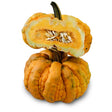
Winter Squash Seeds,
Guicoy
Min. 20 seeds
FREE U.S. SHIPPING, 2-YEAR GUARANTEE
Description
(Cucurbita pepo). A beautiful, dramatically ribbed squash of antiquity that has been prominently depicted in late Maya period art, it remains a delicious staple in its native region. Long vines produce flattened fruit appearing in tones ranging from green to deep yellow. The most delicious fruit is harvested when young and thin-skinned; however, it can be allowed to mature to a tasty and very ornamental pumpkin (the mature fruits average just under 2 pounds apiece). This ancient variety is depicted in late Maya pottery and was featured on a major Maya archeology website.
Growing Tips: Guicoy squash, a winter variety, grows best in warm, well-drained soil rich in organic matter. Before planting, work compost or aged manure into the soil to boost fertility. This squash variety requires full sun, preferably 8-12 hours of direct sunlight daily, to thrive.
Plant Details
- Botanical Name
- Cucurbita pepo
- Life Cycle
- Annual
- Growth Habit
- Vining
- Sun Requirement
- 8–12 hr.
- Days to Germinate
- 5–10
- Days to Maturity
- 100
- Planting Depth
- ½–1 in.
- Plant Spacing
- 18–36 in.
- Ideal Temperature
- 70–95°F
- Frost Hardy
- No
Growing Guide
When to Grow
How to Sow and Plant
How to Grow
How to Save Seeds
FAQ
How do I prevent pests like squash vine borers and squash bugs?
Cover the base of the plants with aluminum foil or use row covers. For squash bugs, regularly inspect the undersides of leaves for eggs and remove them. Organic methods like diatomaceous earth can also be applied to deter pests.
How can I tell when Guicoy squash is ready to harvest?
Guicoy squash is ready to harvest when the skin is hard and cannot be easily punctured with a fingernail. The stem will also start to dry out and turn brown. Harvest before the first frost to avoid any damage to the fruit.
How can I improve pollination for my Guicoy squash plants?
Guicoy squash has both male and female flowers on the same plant, which require pollinators like bees to transfer pollen. To improve pollination, plant flowers such as marigolds, zinnias, or borage nearby to attract pollinators. Avoid using insecticides that could harm these beneficial insects.
Browse our full range of winter squash seeds.