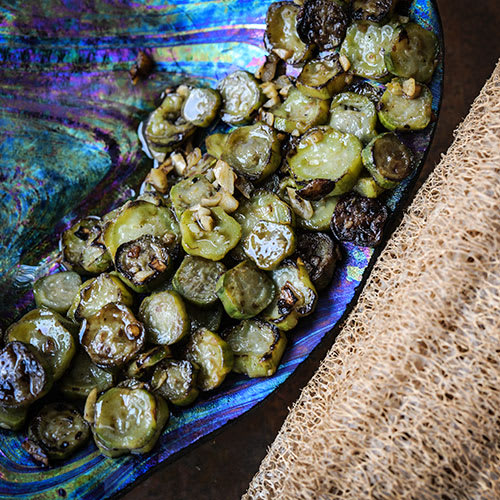
Gourd Seeds
Grow wonderfully odd gourds for bowls, birdhouses, and handmade keepsakes, all from a humble little seed.Wild shapes for birdhouses and bowls.
FREE U.S. SHIPPING • 2-YEAR GUARANTEE


About Gourd Seeds
(Lagenaria siceraria) These Old World squash relatives all need similar conditions: a long season of hot weather and abundant moisture in a rich soil. The fruit will be straighter and more symmetrical if the 20-foot-long vines are trained up a trellis. The edible sorts are best harvested when young, tender, and mild tasting.
How to grow Gourd
Starting seeds
- In longer-season areas, you can sow seeds directly in the garden once soil has warmed to about 70 degrees.
- Growers with a shorter growing season should start seeds indoors three weeks before last frost.
- Ideal germination temperature is 75-90 F.
- Sow seeds 1 inch deep.
- Gourds can have spotty germination; be sure to plant seeds in good soil with plenty of organic matter.
- Be patient; seeds can sometimes take up to three weeks to germinate!
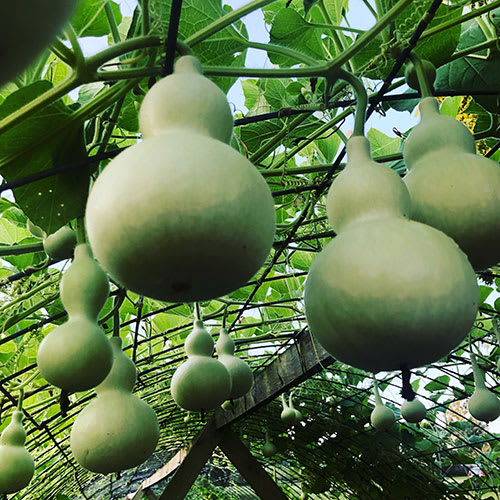
Growing
- Set plants out into good, well-drained soil after frost has passed.
- Set plants 24 inches apart; they will climb and trail, so be prepared for a garden takeover!
- Keep plants well-watered.
- Gourds are grown much like squash, and thanks to their tough skin, they are often better at fighting off pests than other cucurbits.
- A thick layer of mulch is absolutely crucial; the vines will be very difficult to keep weeded once they start trailing. Mulch will help to keep weeds down and retain moisture.
PESTS/SPECIAL CONSIDERATIONS
- Although they are better at fending off pests than other squash relatives, gourds can be susceptible to a virus called cucumber mosaic virus, which is spread by cucumber beetle damage. To avoid the virus, keep cucumber beetles off of your plants.
- Kaolin clay is an organic method for deterring cucumber beetles.
- Beneficials like ladybugs and beneficial nematodes will also help to keep the pests at bay.
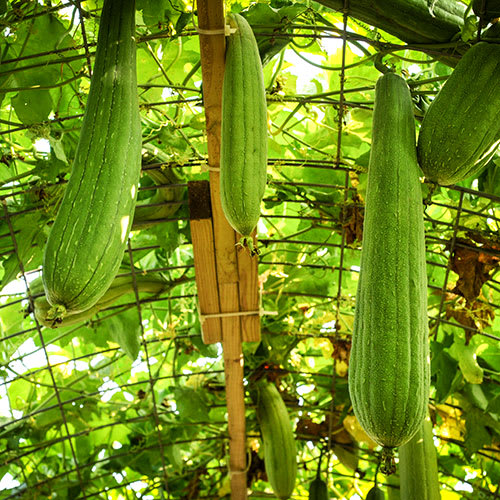
Saving seed
- Gourds are easily cross-pollinated, so it is advisable to isolate different seed-saving varieties up to 1⁄2 mile to ensure seed purity.
- A minimum of 15 plants of each variety should be grown to avoid inbreeding issues. Harvest fruit before it has dried out when it is still green in color but has developed a tough skin.
- Scoop seeds to dry; they will remain viable for about 4 years when stored properly in a sealed container in the refrigerator.
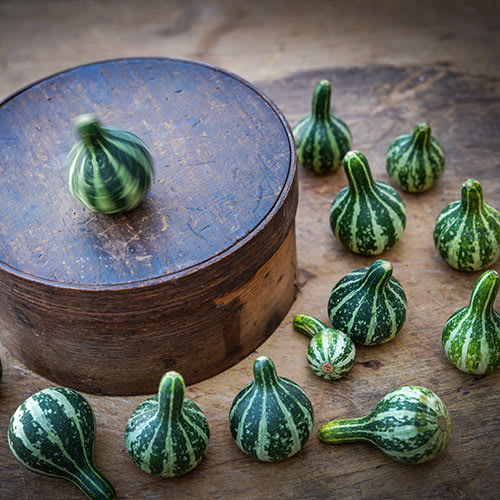
History and uses
Useful, decorative, and sometimes delicious, gourds are a thick-skinned relative of cucumbers and pumpkins. The productive vines have a wild and untamed quality to them that makes a really fantastic statement in the garden. Try growing long gourd vines up a trellis or pergola — unusual and beautiful! Other cucurbit relatives are sometimes mistaken for gourds. True gourds have large seeds and white flowers that bloom at night.
HISTORY
Before the development of metals and plastics, gourds were an integral part of primitive society, serving as bowls, bottles, musical instruments, traditional clothing, and so much more. Native American tribes used bottle gourd birdhouses to attract purple martins, which would eat bugs considered agricultural pests.
USES
- Ornamental
- Utilitarian
- Edible