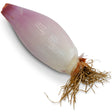
Onion Seeds,
Zebrune Shallot
Faster shipping options also available.
Description
(Allium cepa). Cuisse de Poulet du Poitou is a gorgeous heirloom French eschalion or "banana" type shallot yields plump, long, torpedo-shaped bulbs. Bulbs are brown tinged with pink. The flesh is very mild and sweet, and large yields may be had starting the first year from an early planting. Excellent keeping quality makes these gourmet shallots useful over a very long season!
Growing Tips: Zebrune shallots grow best in full sun and fertile, well-draining soil with a pH between 6.0 and 7.0. Incorporate organic matter, such as compost, to improve soil fertility. Maintain consistent soil moisture, especially during dry periods, but avoid overwatering to prevent rot. Applying mulch can help retain moisture and suppress weeds.
Plant Details
- Botanical Name
- Allium cepa
- Life Cycle
- Biennial
- Sun Requirement
- 6–12 hr.
- Days to Germinate
- 7–14
- Days to Maturity
- 100
- Planting Depth
- ¼ in.
- Plant Spacing
- 4–6 in.
- Ideal Temperature
- 45–80°F
- Frost Hardy
- Yes
When to Grow
How to Sow and Plant
How to Grow
How to Save Seeds
FAQ
Can Zebrune shallots be grown in containers?
Yes, Zebrune shallots can be grown in containers. Choose a container that is at least 12 inches wide and deep, and fill it with well-draining potting mix.
What are common pests affecting Zebrune shallots?
Common pests include onion flies and aphids. Proper garden hygiene and organic pest control methods can help manage these issues.
What makes Zebrune shallots different from traditional shallots?
Zebrune shallots are larger and more elongated than traditional round shallots. They have a milder, sweeter flavor, making them fit for both raw and cooked dishes.
How do I determine day length and first-last frost in my area?
Check out our blog post: Our Experts Answer Questions, Share Resources for links to online guides.
Browse our full range of onion seeds.