Radish Seeds,
Akasuji

51 ReviewSKU: #RD165Min. seed count: 100
Price
Regular price $4.00
Regular price $0.00 Sale price $4.00
Save $-4
/
FREE SHIPPING IN THE U.S.A.
Faster shipping options also available.

Description

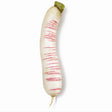
Raphanus sativus var. longipinnatus). A rare red-veined radish from Japan, Akasuji is a striking heirloom daikon on the brink of disappearance. Its pale skin is etched with vivid red streaks, a cosmic contrast that hints at the radish’s refined, unusually sweet flavor. Nearly lost in its homeland, this variety is now highly endangered, with only limited seed available. The thick, juicy flesh remains intact even when cooked, making it perfect for pickles, simmered dishes, and traditional mochi. But it’s the fresh, fall-harvested roots that really shine! We find ourselves eating them nonstop straight from the ground. Mild, crisp, and unbelievably good, Akasuji is a rare chance to grow something both delicious and deeply rooted in Japanese culinary heritage. The roots start out white and develop their striping as they mature.

Plant Details

Botanical Name
Raphanus sativus var. longipinnatus
Life Cycle
Annual
Sun Requirement
6–8 hr.
Days to Germinate
4–10
Days to Maturity
60
Planting Depth
½ in.
Plant Spacing
2–4 in.
Ideal Temperature
50°F to 70°F
Frost Hardy
Yes

When to Grow

Akasuji is a daikon, a winter radish rather than a quick spring one, so sow it in late summer, about two months before your expected first frost, and let the roots finish in cool fall weather. Direct sow 1/2 inch deep into rich, well-drained soil amended with compost; seeds come up in about 4 to 10 days. Thin to 2 to 4 inches apart. Keep watering even, since inconsistent watering causes cracks and splits in the roots, and do not set a planting that will be sizing up in midsummer heat, which hinders root formation, makes roots woody, and sends plants straight to seed. Roots are ready at about 60 days; they start out white and develop their red striping as they mature.

How to Sow and Plant

  • Radishes like rich, well-drained soil and plenty of moisture.
  • Amend beds with compost, and sow seeds 1⁄4 to 1⁄2 inch deep.
  • Direct sow spring radishes starting 4 weeks before the last frost date. You can succession plant every two weeks for the quick-growing varieties like French Breakfast or Purple Plum.
  • Sow winter radishes in late summer, about 2 months before the expected first frost. Direct sow and thin to 4-6 inches apart, for the roots need plenty of room to make a good bulb.
  • Days to germination vary a bit by type of radish but typically range from 3 to 10 days.
  • Ideal germination temperature is 50-75 F.

How to Grow

  • There are two main types of radishes: spring types and winter types. Spring radishes are small and quick growing; they can be harvested in as few as 3 weeks!
  • Winter radishes take longer to grow, but they can be stored for up to 6 months.
  • Radishes are a cool-weather crop and will grow best in spring and fall, but they can be grown throughout the summer except in the hottest parts of the country.
  • Spring radishes are often interplanted with carrots or parsnips. The radishes will germinate and mature well before their planting partners, which need just about a spring radish distance between their roots. Harvest the radishes within 30 days and let the other root crops continue growing.

PESTS/SPECIAL CONSIDERATIONS

  • Radishes’ most common issues are related to heat and water. Radishes do not like excessive heat. It will hinder root formation or cause woody roots, and the plants will go directly to seed.
  • Inconsistent watering will cause cracks and splits in the roots.
  • Low sunlight will cause slender roots that do not bulb up.
  • Do not plant during the heat of summer; radishes much prefer spring and fall.

How to Save Seeds

  • Radishes are insect-pollinated, so you'll need to isolate varieties by up to 1⁄2 mile or stagger plantings to avoid flowering at the same time.
  • Staggering can be easy because of the radish's quick maturity.
  • Allow flower stalks to shoot up and seed pods to dry on the plant before picking pods and opening by hand to remove the seeds.
  • Seeds will remain viable for up to 5 years when stored in an airtight container.

FAQ

Questions?

Browse our full range of radish seeds.
Customer reviews

5 / 5 1 Review
You may also like