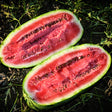
Watermelon Seeds,
Kurobe
Description
(Citrullus lanatus). An extra-jumbo watermelon that can be found individually wrapped in rope ‘baskets’ in Japanese markets and sold for up to 7000 yen each! This iconic variety makes a popular gift in Japan and can often be found at summer picnics. This variety was selected from a U.S. variety called Rattlesnake, which was brought to Japan during the Meiji Era and cultivated in the town of Nyuzen and along the Kurobe River since the 1930s. This variety is presented to the Imperial family every year, and the super sweet mammoth fruit is a popular and expensive gift, up to 70 US dollars each. A giant cartoon watermelon is also a popular Japanese mascot, a nod to this beloved Japanese variety.
Growing Tips: Kurobe watermelon thrives in warm, sunny locations with fertile, sandy loam soil. Use mulch to maintain moisture and suppress weeds, and water consistently to avoid stress. Fertilize moderately with compost or a balanced organic blend at planting and during early fruit development.
Plant Details
- Botanical Name
- Citrullus lanatus
- Life Cycle
- Annual
- Sun Requirement
- Full sun
- Days to Germinate
- 5–10
- Days to Maturity
- 90–100
- Planting Depth
- 1 in.
- Plant Spacing
- 36–48 in.
- Ideal Temperature
- 70 to 95°F
- Frost Hardy
- No
When to Grow
How to Sow and Plant
How to Grow
How to Save Seeds
FAQ
How long does Kurobe watermelon take to mature?
Allow 90 to 100 days from planting to harvest for this extra-jumbo watermelon. Seeds sprout in about 5 to 10 days.
What soil and feeding does Kurobe prefer?
It thrives in a warm, sunny spot with fertile, sandy loam soil. Mulch to hold moisture and suppress weeds, water consistently so the vines are never stressed, and fertilize moderately with compost or a balanced organic blend at planting and again during early fruit development.
Can I start Kurobe indoors?
Yes. In shorter-summer climates, or to get an earlier harvest, sow indoors 3 to 4 weeks before your set-out date and hold the flats at around 80°F for fast germination, using a heating mat if needed. Once seedlings appear give them at least half a day of direct sun or good artificial light, and do not hold them in pots too long, because root-bound transplants are slow to recover.
Alternate domestic shipping options available at checkout.