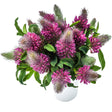
Clover Seeds,
Red Feathers
Description
(Trifolium rubens). A stunning clover with fuzzy magenta and amethyst-colored blooms! Like all clovers, these plants will fix atmospheric nitrogen and improve your soil quality. Plants reach about 15 inches tall. They make a beautiful cover crop or can be grown in pots and raised beds; they are super versatile. Due to a lower germination rate of 72%, we're including extra seeds in each packet to ensure a full planting.
Growing Tips: Red Feathers clover grows best in full sun to partial shade and prefers well-draining soil that remains slightly moist but not waterlogged. It is ideal for attracting pollinators such as bees, butterflies, and hummingbirds, making it a great addition to ornamental gardens, wildflower meadows, or as a ground cover.
Plant Details
- Botanical Name
- Trifolium rubens
- Life Cycle
- Perennial in zones 5–9
- Sun Requirement
- 6–12 hr.
- Days to Germinate
- 7–10
- Days to Maturity
- 90–120
- Planting Depth
- ¼–½ in.
- Plant Spacing
- 3–4 in.
- Ideal Temperature
- 45–80°F
- Frost Hardy
- Yes
When to Grow
How to Sow and Plant
How to Grow
How to Save Seeds
FAQ
Can Red Feathers clover become invasive?
No. Unlike the running pasture clovers, Trifolium rubens forms a tidy upright clump about 15 inches tall and does not spread by runners, which is why it suits beds, pots, and raised beds. Cutting back the spent seed heads keeps it neat and encourages more bloom.
How is Red Feathers clover used in the garden?
It is grown as an ornamental and as a cover crop, not as a food or forage plant. The fuzzy magenta and amethyst blooms draw bees, butterflies, and hummingbirds, so it is at home in ornamental beds and wildflower meadows as well as in pots.
Does Red Feathers clover fix nitrogen?
Like most clovers, Red Feathers Clover improves soil quality by fixing nitrogen, making it a beneficial addition to a garden.
Browse our full range of clover seeds.
Alternate domestic shipping options available at checkout.