Eggplant Seeds,
Neimat's Battir

54 ReviewsSKU: #EG216Min. seed count: 10
Price
Regular price $4.00
Regular price $0.00 Sale price $4.00
Save $-4
/
FREE SHIPPING IN THE U.S.A.
Faster shipping options also available.

Description

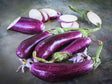
A tender, creamy and flavorful traditional eggplant from the ancient terraced fields of Battir, Palestine. This is the famous delicacy of the UNESCO World Heritage Site and Eco Museum on the West Bank. The eggplant is known for its incredibly delicious eating quality, and it is considered essential to making really authentic and gourmet Palestian dishes like Makdous, a pickled, stuffed eggplant dish. This ancient heirloom has a deeper root system, which is an adaptation to growing in the arid conditions of the region, making it impressively drought tolerant. The 5-8 inch fruit are bright purple with pale purple stripes, and have a dense but creamy flesh and low seed count. Locals love to eat this tender variety raw, just like a cucumber and yes, it is that mild -- a real treat! The medium-sized plants are well branching and produce an abundance of highquality fruit. Thanks to Maryanna Krivak, who sent us a sample of seeds from her friend Neimat, whose family lives in the area and grows this timeless heirloom treasure.

Growing Tips: Start indoors in bright light 8-12 weeks before last frost date. Heat mat helps to warm soil and speed germination. Setting out larger transplants helps to fight pest pressure.

Plant Details

Botanical Name
Solanum melongena
Sun Requirement
Full sun
Days to Germinate
10–15
Planting Depth
¼ in.
Plant Spacing
18 in.
Ideal Temperature
75–95°F
Frost Hardy
No

When to Grow

Neimat's Battir cannot tolerate low temperatures, so give it a thoroughly warm start: sow indoors in bright light 8–12 weeks before your last frost date, ¼ inch deep, into soil warmed to 75–89°F. A heat mat is the simplest way to hold that heat, and germination takes 10–15 days.

Transplant only after all chance of frost has passed and the soil has warmed to at least 65°F; larger transplants stand up better to pest pressure. This heirloom roots more deeply than most eggplants, so choose a spot where the soil is loose well below the surface, then mulch around the plants to suppress weeds and hold moisture.

How to Sow and Plant

  • Eggplant cannot tolerate low temperatures, especially while germinating.
  • Start seeds indoors in bright light 8-10 weeks before the last frost date.
  • Soil should be warmed to 75-89 degrees to ensure consistent germination. Using a horticultural heat mat is highly recommended to warm the soil and speed germination.
  • Plant seeds ¼ inch deep.
  • Germinates in 10-15 days.
  • Setting out larger plants helps to fight pest pressure.

How to Grow

  • Transplant outdoors after all chance of frost has passed and soil has warmed to at least 65 degrees.
  • Space plants 2.5 feet apart; they do not need staking.
  • Keep well watered but not soaked, and mulch around plants to suppress weeds and retain moisture.
  • Fruit is mature when just slightly soft; immature fruit will feel rock hard. Continually harvest to keep plants productive.

PESTS/SPECIAL CONSIDERATIONS

  • Flea beetles are a common pest of eggplant. Thick mulch will help to bury the insects.
  • A floating row cover over young seedlings will protect plants when they are most vulnerable; just be sure to uncover for pollination when plants are flowering.
  • Aphids can be controlled with row cover as well, or neem oil can be applied for serious infestations.

How to Save Seeds

Saving eggplant seeds is very easy!

  • Eggplants are not insect-pollinated, so it is not necessary to isolate the plants very much to ensure pure seed. For home gardeners, an isolation distance of at least 40 feet is sufficient for seed saving.
  • Allow fruit to become overripe; the fruit will become slightly wrinkled and soft.
  • Scoop seeds out, rinse, and spread out to dry thoroughly.
  • Properly stored eggplant seeds will remain viable for up to 4 years.

FAQ

What are Neimat's Battir fruit like?

Bright purple with pale purple stripes, 5 to 8 inches long, with dense but creamy flesh and a low seed count. Locals love to eat this tender variety raw, just like a cucumber, and it is considered essential to authentic dishes such as Makdous, a pickled, stuffed eggplant dish.

Is it drought tolerant?

This ancient heirloom has a deeper root system, an adaptation to growing in the arid conditions of its region, which makes it impressively drought tolerant. General eggplant care still applies: keep plants well watered but not soaked, and mulch around them to suppress weeds and retain moisture.

Where does this variety come from?

The ancient terraced fields of Battir, Palestine, a UNESCO World Heritage Site and Eco Museum on the West Bank. We have it thanks to Maryanna Krivak, who sent us a sample of seeds from her friend Neimat, whose family lives in the area and grows this heirloom.
Customer reviews

5 / 5 4 Reviews

What gardeners are saying

  • Meaty and hearty: Meaty, hearty fruit for sauces, grilling, or stuffing.

  • Tall, sturdy plants: Plants reach 4 feet and need a stake.

  • Thrives in heat: Took off in a heat wave and loaded up with fruit.

  • Palestinian heirloom: A treasured variety in Palestinian cooking.

You may also like