Tomato Seeds
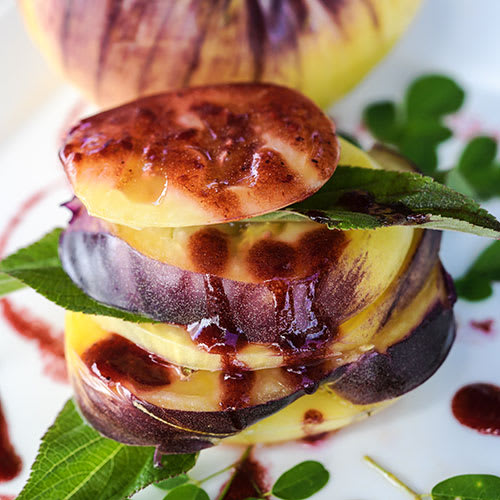
Slice sun-warmed heirloom tomatoes and taste the summer flavor that makes gardeners swoon each year.Sun-warmed sweetness brings summer bliss.
FREE U.S. SHIPPING • 2-YEAR GUARANTEE


About Tomato Seeds
(Solanum lycopersicum except as noted) Native to the Americas and once mistakenly believed to be poisonous, tomatoes have become the most popular garden crop. We carry a huge range of heirloom tomato varieties in different colors, shapes, sizes, and flavors to explore, and seed saving is easy. A favorite of home gardeners and seed collectors, as heirloom and open-pollinated types are famously more flavorful than commercial ones. All the varieties we sell are believed to be indeterminate (long vines), unless specified 'determinate' (currently only Gourmandise Yellow, Martino's Roma, Micro Tom, Orange Hat, Principe Borghese, and Purple Reign) or 'semi-determinate' (currently only Phil's One, Prairie Fire, Phil's Two, Raspberry Lyanna, and Thorburn's Terra Cotta.
Cherry Tomato Seeds
Currant, grape and cherry types such as Chadwick Cherry and the Bumble Bee series ripen in clusters on long indeterminate vines: browse our heirloom cherry tomato seeds for snacking, salads and drying.
Tomatoes by Color
Beyond classic slicers like Cherokee Purple and True Black Brandywine we grow heirloom tomatoes in every shade: pink tomato seeds, orange, green, white, blue and striped and bi-color tomato seeds. All are open-pollinated and non-GMO, so you can save seed from your favorites. Use the Color and Fruit Size filters to narrow the collection.
How to grow Tomato
Starting seeds
- As a tropical crop, tomatoes need plenty of warm weather and a long growing season. (Days-to-maturity figures count the time to first harvest from setting out transplants, which in turn take 6-8 weeks to grow before reaching transplant size.)
- Avoid planting tomatoes too close to Brassica varieties such as cabbage and broccoli, as they may inhibit tomato growth.
- In long-summer climates, they may be direct sown as soon as frost is past, but most gardeners start the tiny seeds indoors 6-8 weeks before the last spring frost date.
- Either way, the seeds are just barely covered and germinate most rapidly in temperatures of 70 and above—80 degrees is best. (Use a heating mat indoors if necessary).
- Seeds germinate in 7-14 days.
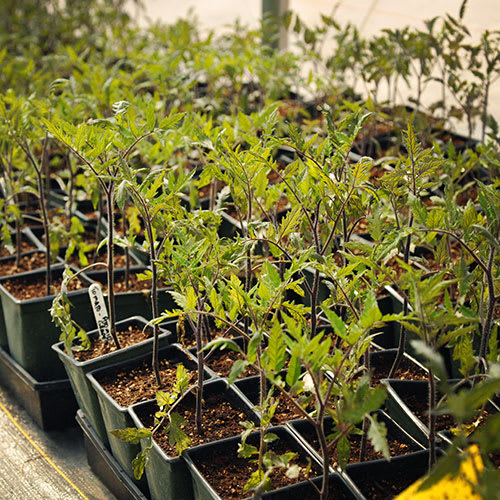
- Once the sprouts appear, they require good light to grow well.
- They may need to be fed once or twice to make good growth prior to transplanting outdoors, which happens after last frost.
Growing
- Tomatoes tolerate a wide range of soil conditions but do best in deep, rich soil and in full sun.
- Plants are usually staked but may be allowed to sprawl; spacing depends upon variety and which method is to be used.
- Staked plants can be grown 18” apart in rows 3 or more feet apart; space 2-3 feet apart in rows 4 feet apart if the vines will be allowed to sprawl.
- Determinate plants are usually smaller, requiring less space, and often need less support than indeterminate varieties. See above for a list of available determinate and semi-determinate varieties. Most varieties we sell are indeterminate.
PESTS/SPECIAL CONSIDERATIONS
- Soil should be amended with plenty of compost; a little bone meal or other calcium source wards off blossom-end rot.
- Hornworms can be controlled by daily hand picking; chickens love them. Hornworms are excellent camouflage artists, but their presence is marked by their excrement, which looks like small grenades.
- It is also useful to keep tomato plants as far away from each other as practical in the garden.
- If you find a hornworm that appears to have grains of white rice glued to its sides, it’s been parasitized, and that means the beneficial Braconid wasps have arrived to the rescue! Leave this hornworm in place as a nursery: the white grains are wasp cocoons, and the adult wasps that emerge will parasitize more hornworms.
- Pest control through “hiding” tomatoes in a polyculture planting can also be effective. Plant them with chili peppers, marigolds, borage, chives, nasturtiums, basil, calendula, sage, onions, and garlic.
Saving seed
- Most tomatoes are self pollinating and crossing isn’t likely; in a garden setting, separating by 25 feet should prevent 99% of cross-pollination. Or you can bag and hand pollinate for 100% purity.
- On a small scale, seeds may be scooped from the fruits and dried on a paper towel.
- For larger quantities or cleaner seed, fermentation for several days is recommended.
- Once dry, tomato seed can be stored in a cool, dry, dark place, and good seed retains viability for 5 years or more.
History and uses
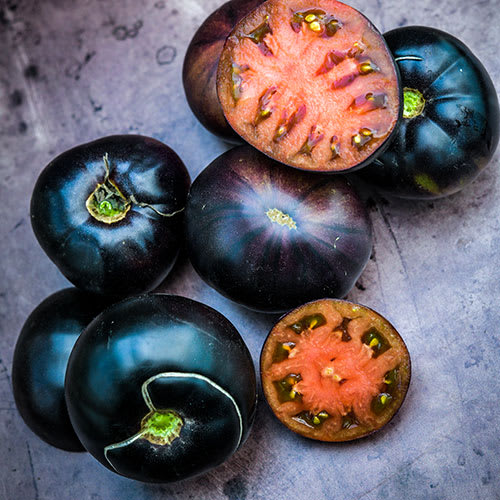
Perhaps no heirloom crop inspires quite so much feeling among gardeners as tomatoes. They are the jewels of the summer garden. Tomatoes grow in an endlessly dazzling range of sizes, shapes, colors, and flavors, making them the most popular garden crop of the last 200 years. Tomato plants are either determinate or indeterminate. The best-tasting varieties tend to be heirloom and indeterminate.
- Determinate varieties stop their shoot production once the flower forms and set most of their fruit early. The plants are bushier and can be better contained, making them a good choice for small garden spaces. We currently offer 6 determinate varieties: Gourmandise Yellow; Martino's Roma; Micro Tom; Orange Hat; Principe Borghese; and Purple Reign. In addition, we offer 4 semi-determinate varieties: Prairie Fire; Phil's Two, Raspberry Lyanna; and Thorburn's Terra Cotta.
- Indeterminate varieties will form flowers along the sides of the shoots but continue to grow. Indeterminates typically set fruit longer and need more space to grow. Gardeners often manage them with pruning and trellising. All the other varieties we sell, except those named above are believed to be indeterminate unless specified as determinate.
For even more information about growing tomatoes, please see our "Tomatoes 101" post from our horticulture expert John Lenz.
HISTORY
The wild progenitor of tomato is thought to have originated in the Andes Mountains of Peru and Ecuador, and domesticated in pre-Columbian Mexico. Its name comes from the Nahuatl (Aztec) word ‘tomatl.’ Tomatoes made their way to Europe in the early 16th century. While Spain and Italy adopted it into their foodways, in other places (such as northern Europe) tomatoes, as a member of the nightshade family, were believed to be poisonous and grown as ornamental plants only. The Spanish distributed the crop worldwide through their trade and colonies in the Caribbean and the Philippines, from which the crop spread to the Asian mainland. Tomatoes were grown in the U.S. starting in the Carolinas, possibly appearing there from the Caribbean. Thomas Jefferson grew and ate them. Modern breeding work began only in the late 1800s, beginning with Alexander Livingston, an early seedsman who released ‘Paragon’ in 1870.
USES
- So many culinary uses!
- Can also be grown as part of an edible landscape garden