


With the outdoor growing season winding down for most gardeners, it’s comforting to know that we can bring a thriving slice of the garden indoors! Container gardening is also perfect for apartment dwellers, urban gardeners, or anyone who wants to enjoy homegrown goodness year-round. The trick is to choose compact, quick growers that don’t need deep soil or blazing summer sun. Think herbs, salad greens, green onions/garlic greens, microgreens, and a handful of small edible flowers.
Read on for specific recommendations, notes on growing, and simple set-ups for success!
Quick Start: What You’ll Need
- Light: A bright south/south‑west window works for many herbs/greens. A basic 2–4 ft LED shop light makes everything easier—run 12 to 16 hours/day on a timer, 6 to 12 inches above the leaves.
- Containers: 4– to 6-inch pots for herbs; 6-inch-deep pots/trays for cut‑and‑come‑again greens; shallow trays for microgreens. All pots need drainage and a saucer.
- Potting mix: Lightweight, soilless mix (not garden soil).
- Watering: Keep evenly moist, never soggy. Let the top ½–1 inch dry between waterings for Mediterranean herbs.
- Temperature: Most edibles like 65 to 75 F by day; a little cooler at night is fine. Keep basil away from cold drafts.
- Humidity & airflow: Group pots, use a pebble tray, and give a bit of airflow to discourage mites/mildew.
How to Choose the Right Containers
The success of your indoor crops begins with choosing proper containers.
- Size Wisely: Leafy greens and herbs thrive in shallow pots (6–8 inches deep), while fruiting plants like tomatoes or peppers need larger containers (12–18 inches deep). Give ‘em plenty of space to grow!
- Drainage is Key: Always use pots with drainage holes. Too much water leads to root rot. Use trays or saucers underneath the pots to protect indoor surfaces.
- Mind Your Materials: Terracotta breathes but dries out quickly; plastic retains moisture; and fabric pots provide excellent aeration. Select pots based on your watering habits and also be mindful of a plant’s watering preferences. In the case of herbs, for example, most mint family relatives prefer drier conditions (but not too dry!).
The Best Soil Mix for Indoor Crops
Resist the temptation to use outdoor garden soil, which is too heavy and runs the risk of pest contamination. Instead, choose a high-quality potting mix that is:
- Lightweight and well-draining to prevent soggy roots.
- Brimming with organic matter. Compost or coco coir enriches the soil.
- Light and fluffy. Perlite or vermiculite improves soil aeration and water retention.
Natural and Artificial Light
The right light, at the right time, is the most important factor for indoor growing.
- South-facing windows provide the most sunlight. Leafy greens and herbs should like it there.
- East- or west-facing windows are good for partial-shade crops like peas or lettuce.
- Full-spectrum LED grow lights may be the best bet for delivering consistently good light. Position them 6 to 12 inches above the plants and keep them on for 12 to 16 hours daily.
- And don’t forget to turn, turn, turn! Give your potted plants a turn toward the light source every week or so to expose all sides of the plant to light.
- Temperature: Most edibles like 65–75 F by day; a little cooler at night is fine. Keep basil away from cold drafts.
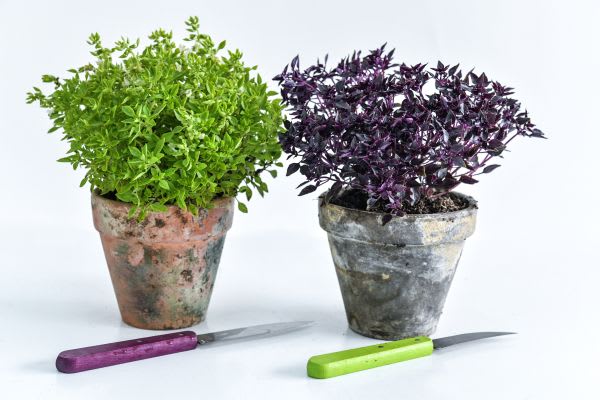
Greek Ball Basil (left) and Purple Ball Basil
How Much Water and Humidity?
Keep in mind that the modern conveniences that keep us comfortable – heating and air conditioning – can make indoor plants dry out more quickly. Here are a few rules of thumb for watering:
- Use the ‘finger test’ to check the soil moisture. Stick a finger into the soil at least one inch. Water if it’s dry.
- Lift the pot. If it feels much lighter than usual, give your plant a drink!
- Observe the soil color. If it’s lighter in color, it’s probably time to water.
- Bottom water plants by putting the pots in a tray of water to hydrate the roots evenly. Take them out when the top layer of soil feels moist to the touch.
- Maintain humidity by grouping plants together, using pebble trays, or running a small humidifier for crops such as basil that prefer higher air moisture.
What Should I Feed My Indoor Crops?
Since the soil nutrients and plants’ roots are constrained by space, make sure to provide food at regular intervals.
- Apply balanced, organic liquid fertilizers such as fish emulsion or seaweed extract every two to four weeks during the plant’s active growth.
- Slow-release pellets provide steady nutrition for longer periods.
- Avoid over-fertilizing, which can lead to salt buildup and damage plant roots. Light feeding (quarter strength) every two to four weeks keeps leaves producing. Don’t overfeed herbs – the flavor diminishes, and growth gets leggy.

Bloody Oakhart lettuce in a pot
Managing Pests and Diseases Indoors
Indoor growing is no guarantee that pests like aphids, spider mites, or fungus gnats won’t find your plants, but there are some ways to minimize and treat the little buggers when they show up.
- If you are growing from plant starts rather than from seed, inspect and quarantine the new additions before introducing them to the rest of the plant gang.
- To treat fungus gnats, let the top layer of soil dry more; use sticky traps; and bottom water when possible.
- To treat aphids and spider mites, rinse or use a mild soapy water spray and raise the humidity and improve airflow.
- Use safe, organic pest solutions such as neem oil or insecticidal soap.
- Give everyone space to breathe by providing a small fan to move the air around. This will help prevent fungal diseases and strengthen the plants’ stems.
- Got leggy plants? If you’re growing in natural light, move the pots closer to the glass, add reflective white behind the pots, or switch to a grow light.
Harvest Indoor Crops Often
- For herbs, snip leaves from the top to encourage bushier plants.
- For lettuce and greens, use the ‘cut-and-come-again' method of harvesting outer leaves.
- For fruiting crops such as peppers and cherry tomatoes, pick them as soon as they’re ripe to make way for more production.
And Now, Our Top Picks and How to Grow Them!
Check out our Container Garden Favorites! Our gardening team has assembled a list of seeds for your best indoor crops.
Best Culinary Herbs (Small Pots, Big Payoff!)
Windowsill winners (tolerate moderate light):
- Chives — Common, Chinese (garlic) chive
- Cilantro — Slo‑Bolt (Resow every 2–3 weeks for continuous leaves)
- Lemon Balm — Green, Limoncello (great for tea)
- Parsley — Giant of Italy, Moss Curled
These love a bright window or grow light (6+ hrs equivalent):
- Basil — Genovese, Cinnamon, Lemon, Siam Queen Thai, Dark Purple Opal
- Oregano — Vulgare, Wild Za’atar
- Thyme — Common, Orangelo
- Sage — Broad Leaf
- Rosemary — Rosy (slow from seed; keep on the dry side)
Care notes: Pinch basil regularly; let thyme/oregano dry a touch between waterings; keep cilantro/parsley evenly moist and coolish.
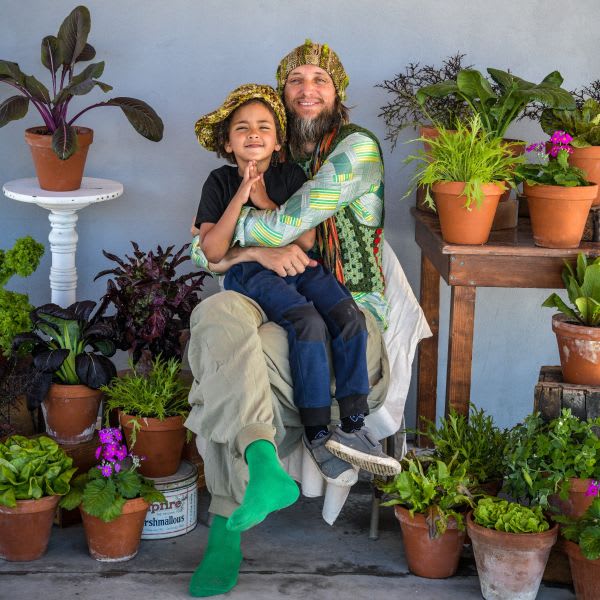
Hunter and his dad, Ryan Schumacher, in their happy place surrounded by potted plants!
Scallions and Garlic Greens (Ridiculously Easy!)
- Green Onions (Bunching):
- Onion Ishikura Bunching (also clip greens from Akatama Salad Red, Red of Florence, Wethersfield Red while plants are young)
- Garlic Greens (from cloves, not for bulbing indoors):
- Use extra cloves from Chesnok Red or Elephant garlic—plant point up, just under the surface, 2″ apart. Start snipping at ~6″ tall; they regrow for a few cuts.
- Light: moderate; keep evenly moist.
Indoor Tomatoes? You Bet!
You don't have to go all winter long without the taste of home-grown tomatoes. These mini tomato varieties stay small enough for a windowsill or tabletop but deliver fresh flavor even when it's cold and gray!
- Micro Tom Tomato
- Orange Hat Tomato
- Gourmandise Yellow

Orange Hat Tomatoes
Salad Greens & Leafy Veggies (Cut-and-Come-Again)
These are the easiest indoor edibles—you harvest leaves, not fruit, so their light needs are modest and timing is fast.
- Loose‑leaf lettuces (great in trays/pots, 4 to 6+ hours light): Heirloom Cutting Mix, Buttercrunch, Little Gem, Landis Winter, Forellenschluss, Merlot, Tom Thumb
- Spinach (cool‑tolerant; loves bright light but manages with moderate): Bloomsdale Long Standing, Monstrueux De Viroflay, Gigante d’ Inverno, Monnopa
Peppery greens (fast, 3–5 weeks to first salads):
- Arugula: Common, Wild Rocket, Red Dragon
- Mustards: Green Wave, Wasabina Leaf, Southern Giant Curled, Japanese Giant Red
- Asian greens: Tatsoi (Green), Mizuna (Japanese Red Mustard), Bok Choy (Baby Milk, Purple Lady)

He Dou Tiny Bok Choy
Compact kale & chard (harvest young “baby” leaves):
- Kale: Dwarf Siberian, Nero di Toscana (Lacinato), Russian Red or Ragged Jack
- Swiss chard: Five Color Silverbeet, Perpetual Spinach, Barese
How to plant: Sow densely in a 6″+ deep pot/tray. Start cutting outer leaves in 4–5 weeks and resow a small tray every 2–3 weeks for continuity.
Edible Flowers for Winter Cheer (Bright Light Required)
Flowering indoors takes more light; a sunny window or grow light makes all the difference. Always use unsprayed blooms for eating.
- Nasturtiums (peppery greens & flowers): Alaska Mix, Cherry Rose Jewel, Tip Top Pink Blush, Black Velvet, Golden Jewel
- Calendula (cool‑tolerant; petals for color/flavor): Pacific Beauty Mix, Strawberry Blonde, Orange King, Pink Surprise
- Compact marigolds (petals are edible garnish): Safari Tangerine, Little Hero Fire, Disco Mix, Bambino
- Pansies/Violas (cool lovers; edible, mild petals): Celestial Blue Pansy, Trumpets Mix Pansy, Bowles Black (and more)
- Tea & garnish flowers (foliage edible/tea): Borage Blue (and White), ChamomileZloty Lan

Disco Mix Marigolds
Two Foolproof Set Ups:
A) Window‑Only Plan (no special gear)
- Parsley (Giant Of Italy), Chives (Common), Cilantro (Slo‑Bolt), Lemon Balm
- A tray of Heirloom Cutting Mix + Arugula Common
- Onion ‘Ishikura Bunching’ pot
- Optional: Nasturtium Alaska Mix in the brightest spot
B) One‑Light Shelf (2–4 ft LED shop light, 12–16 hrs/day)
- Herbs that love light: Basil Genovese, Oregano Vulgare, Thyme Common, Rosemary Rosy
- Two trays: Lettuce Little Gem + Spinach Bloomsdale
- One “spicy” tray: Arugula Wild Rocket + Mustard Wasabina
- Micro tray: Radish De 18 Jours or Broccoli Calabrese (resow weekly)
- Pot for Onion Ishikura + a bowl of garlic greens
Planting Rhythm (So You Always Have Something Ready)
- Every week: Start a new microgreens tray.
- Every 2–3 weeks: Resow a small tray of lettuce/arugula/mustards.
- Every 6–8 weeks: Refresh cilantro; basil can be restarted as needed.
- Ongoing: Keep cutting scallion tops and garlic greens; they regrow.
Final Tip:
Skip deep‑rooted or sprawling summer crops indoors (big tomatoes, full cabbages, etc.). Stick to the lists above and you’ll be cutting fresh salads, snipping herbs, and even garnishing with flowers all winter long!
About the Author:
Michelle Johnson wears a lot of hats here at Baker Creek, but perhaps her favorite role is that of seed historian. She produced many of the Seed Stories videos on our YouTube channel (and yes, that's her voice narrating many of them!) and frequently contributes stories to The Whole Seed Catalog. With decades of experience as a journalist, both in print and on the radio, she is delighted to use her reporting skills to dig in to the history of seeds and the people who grow them.

Michelle Johnson with carrots


