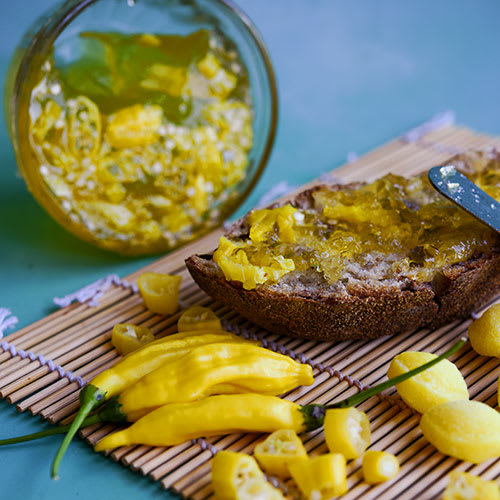
Pepper Seeds
Explore heirloom peppers in a rainbow of shapes and flavors, from sweet snacks to fiery homemade hot sauce.Sweet, spicy, every shade of fabulous.
FREE U.S. SHIPPING • 2-YEAR GUARANTEE


About Pepper Seeds
(Capsicum spp.) Native to the Americas, peppers come in many unusual flavors, and all shapes and sizes. Heirloom peppers are often more flavorful than the modern types, and most give huge yields. Easy to grow and not much bothered by pests. Most types can be used green or ripe.
Hot Pepper Seeds
From mild jalapeño and Padrón through cayenne, Scotch bonnet and habanero to the superhot Bhut Jolokia (ghost pepper), browse our heirloom hot pepper seeds. Every variety is open-pollinated and non-GMO, so the seed you save this year grows true next year.
Sweet Pepper Seeds
Bell peppers in red, orange, yellow, purple and chocolate, Italian frying peppers like Jimmy Nardello, pimentos such as Lipstick, snacking minis and the heatless habanero-flavored Habanada: shop heirloom sweet pepper seeds with a depth of flavor modern hybrids cannot match. Use the Heat Level filter to sort the whole collection from no heat to superhot.
How to grow Pepper
Starting seeds
- Pepper seeds can be a bit challenging to germinate. However, once established they will flourish in most gardens with little fussing.
- Start seeds indoors eight to 10 weeks before the last frost date. It can be helpful to provide a source of bottom heat, such as an electric seed-starting heat mat, to encourage germination. Hotspots around the house, such as on top of the refrigerator, can also work well.
- Grow them under good light or in full sun.
- In good temps (80- 85 F) seeds sprout promptly.
- Sow seeds ¼ inch deep.
- Seeds germinate in 7-10 days.
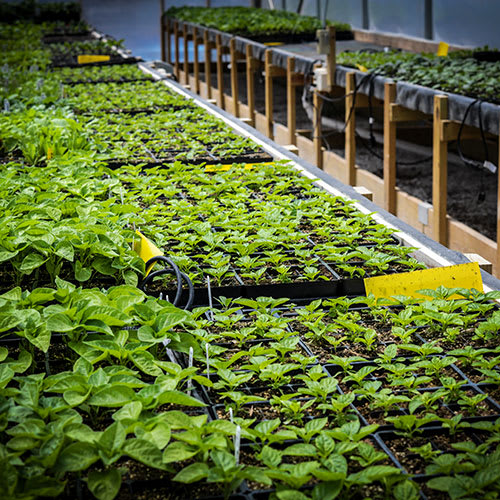
Growing
- Set hardened transplants outdoors when temperatures have reached a consistent 65 degrees and all chance of frost is past.
- Plants should be set about 16 inches apart in full sun.
- Peppers love heat and sunshine. Growers in northern climates should consider using black plastic mulch to warm the soil in the spring.
PESTS/SPECIAL CONSIDERATIONS
- Blossom end rot is a common ailment of peppers. Fortunately, this is one of the most easily remedied issues. Inconsistent watering is usually the cause.
- Be sure to water consistently, and consider purchasing drip tape irrigation.
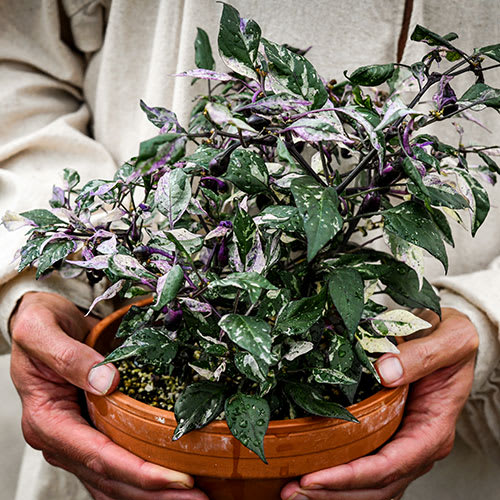
Saving seed
- Peppers are mainly self pollinating, but bees occasionally work pepper flowers.
- To be absolutely sure that you will not have any crossing, different varieties should be isolated by at least 500 feet.
- To save seed, allow the fruit to mature fully; then simply remove seeds.
- It is a good idea to wear gloves while processing very hot peppers, and to consider wearing a mask when working with a large quantity of dried seeds.
- Let seeds dry for a week before storing in a jar.
- Pepper seeds will remain viable for up to 5 years.
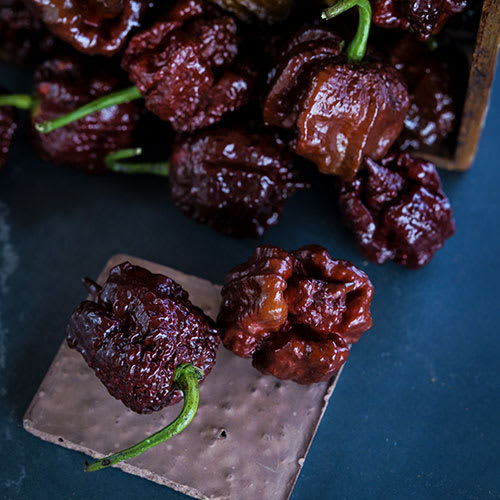
History and uses
A member of the Solanaceae family, peppers are a global crop with an astounding range of flavors, from blazing hot to sugar sweet, and a dazzling diversity of shapes, colors and sizes.
HISTORY
Peppers are native to South and Central America. Christopher Columbus introduced them to Europe, where they spread quickly throughout the continent and beyond. Eggplants and tomatoes are in the same family as peppers; tomatoes too were introduced to Europe around the same time. Unlike with peppers, however, Europeans were slow to embrace tomatoes and eggplants as food crops, relegating them to ornamental status because of a widespread belief that they were poisonous.
USES
- Many culinary uses.
- Capsaicin, the chemical compound contained in hot peppers, is used in pharmaceutical preparations.